Why Small Studios Win by Speaking Every Player's Language
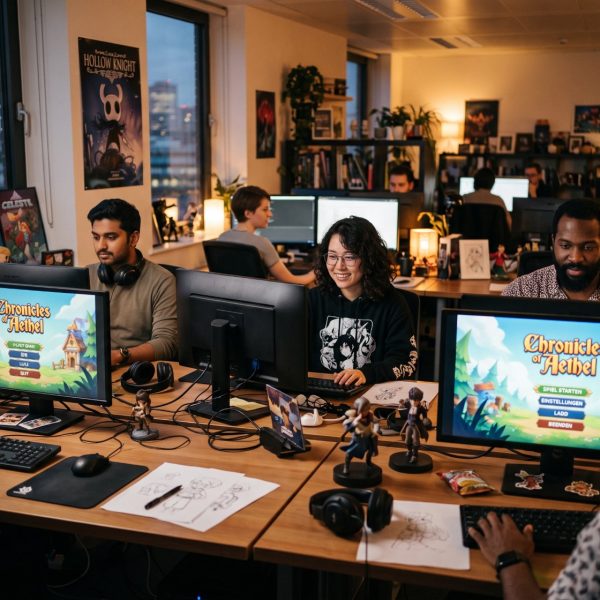
A studio can spend three years building a game with sharp combat, a clever story, and art that players screenshot for fun. Then it launches, and the reviews from Tokyo, Berlin, and São Paulo say the same thing. The menus make no sense. A joke lands flat. The tutorial reads like it went through a machine and came out sideways.
This is the quiet problem behind a lot of underwhelming global launches. The game was ready. The words were not. Studios that treat language as a launch-week afterthought almost always leave money and players on the table.
The Market Is Not Where You Think It Is
Most of the people who could play your game do not read English as a first language. Mobile has pushed gaming into markets where a localized store page is the difference between an install and a scroll past.
The teams that grow fastest tend to plan for this early. They build their text so it can be pulled out, translated, and dropped back in without breaking the interface. They also decide, before writing a single line of dialogue, which regions actually matter for their genre. A puzzle game and a tactics game do not chase the same audiences.
That planning is where a serious game localization service earns its place. Good localizers do more than swap words. They flag the pun that will not survive, the color that means something different in another culture, and the button label that runs three characters too long in German.
Translation and Localization Are Not the Same Job
People use the words as if they mean one thing. They do not.
Translation converts text. Localization rebuilds the experience so a player in Madrid feels the game was made for them, not shipped to them. That includes currency, date formats, character names, humor, and sometimes the art itself.
- Translation accuracy keeps the meaning intact across idioms and slang, which machine tools still fumble.
- Cultural adaptation catches references that would confuse or offend a local audience.
- Technical fit makes sure translated strings do not overflow menus or break on smaller screens.
This is why studios that care about quality work with a specialist rather than a volunteer forum. Community translations can be wonderful, but they are unpredictable, and they rarely handle testing.
What Studios Actually Buy When They Hire Help
When a developer brings in professional translation services, they are usually paying for a process, not a single deliverable. A capable translation company will handle string extraction, translation by native speakers, cultural review, and a testing pass inside the real build.
That last step matters more than most first-time developers expect. A string can be translated perfectly and still break the game because it is too long, sits in the wrong place, or triggers an encoding bug. Testing inside the running game catches what a spreadsheet never will.
The difference between a cheap job and a good one shows up in the parts players never consciously notice. Menus that fit. Subtitles that match the voice track. A quest log that reads like a person wrote it.
Small studios that punch above their weight internationally almost always made language a design decision rather than a release-week task. Retrofitting that later is where the budget disappears and the release date slips. This piece on localization strategy is a clear-eyed look at the mistakes that stall growth in new markets.
The Certified Corner Most Developers Ignore
There is a part of studio life that has nothing to do with dialogue and everything to do with paperwork. Publishing contracts, age-rating submissions, and cross-border business filings often need certified translation services, where an official stamp confirms the document is a faithful version of the original.
This is easy to overlook until a distribution deal in a new country stalls because a contract was translated by someone with no authority to certify it. Studios expanding into new regions run into this more often than they admit, and the fix is slower when it happens at the last minute.
How Indie Teams Can Keep This Affordable
Localization has a reputation for being expensive, and for a sprawling role-playing game with a million words, it can be. Small teams have room to be smart about it.
Start with the store page and the first hour of gameplay, since that is what decides most reviews and refunds. Prioritize the two or three languages that match your biggest potential markets rather than spreading thin across ten. Keep a clean, well-labeled text file so nothing gets translated twice.
Developers who compare notes on communities like r/gamedev tend to agree on one thing. The studios that budget for language from the start spend less overall than the ones who bolt it on in a panic after launch.
The Takeaway for Anyone Shipping Globally
A game speaks to players through its words as much as its mechanics. When those words feel native, the game travels. When they feel bolted on, players notice within minutes and the reviews follow.
Whether a studio hires a full translation agency or a focused localization partner, the goal is the same. Make every player, in every market, feel like the game was built with them in mind. That is not a luxury for the biggest publishers anymore. It is how ambitious small teams punch far above their size.